Protecting Parkland: Save Golden Pond
Learning to Advocate for Improvements
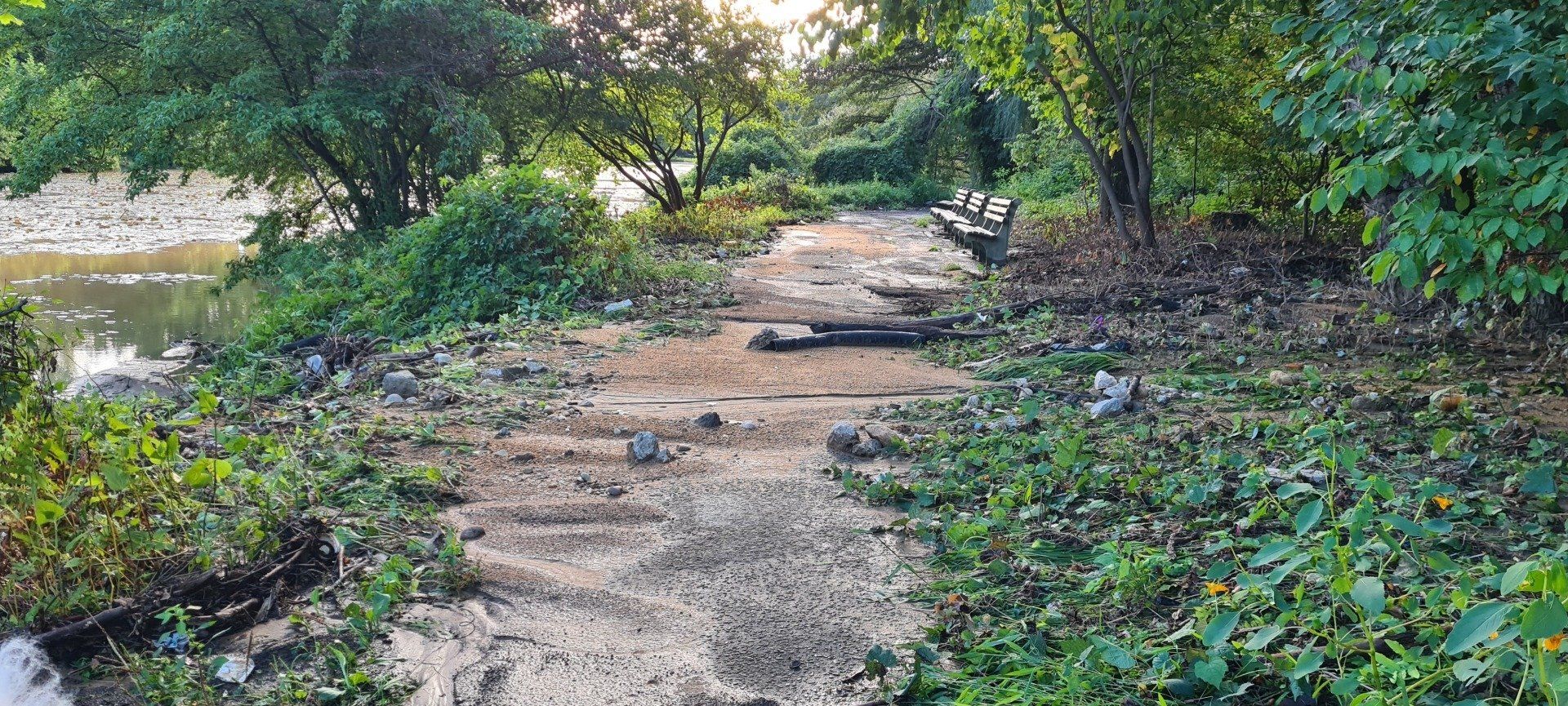
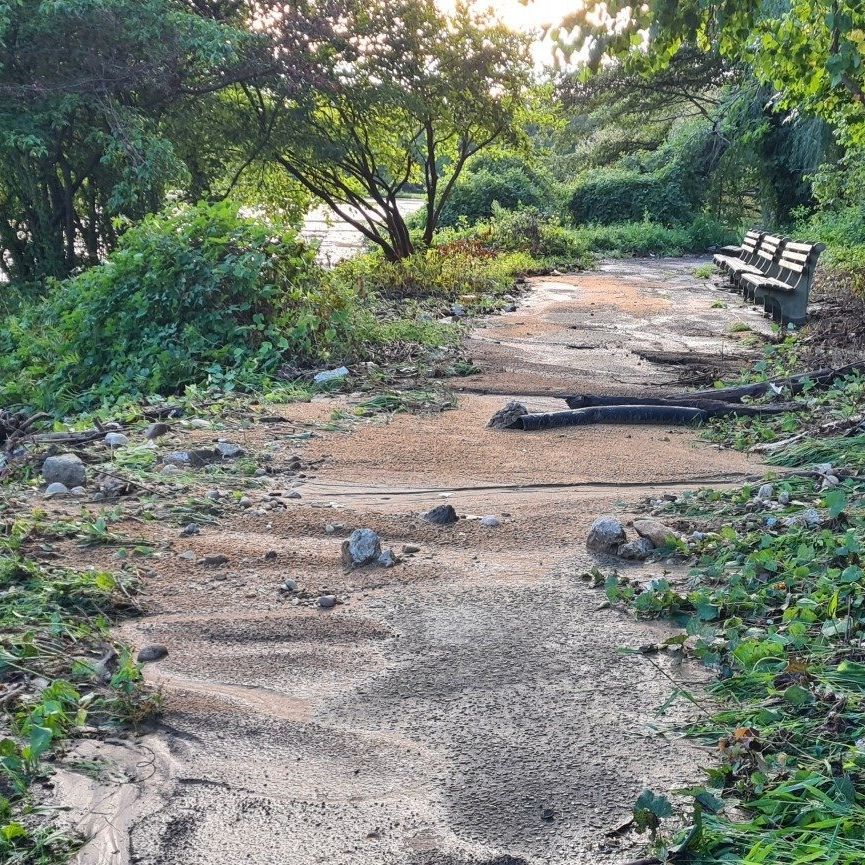
Golden Pond After Ida. South-western walkway September 2nd, 2021 day after Ida hit NYC
Care and Repair Needed for Golden Pond
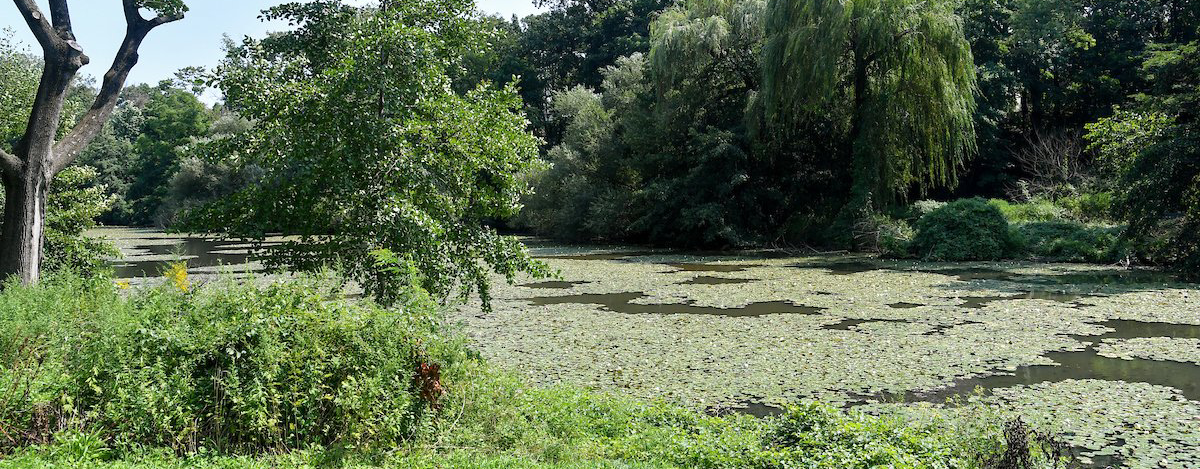
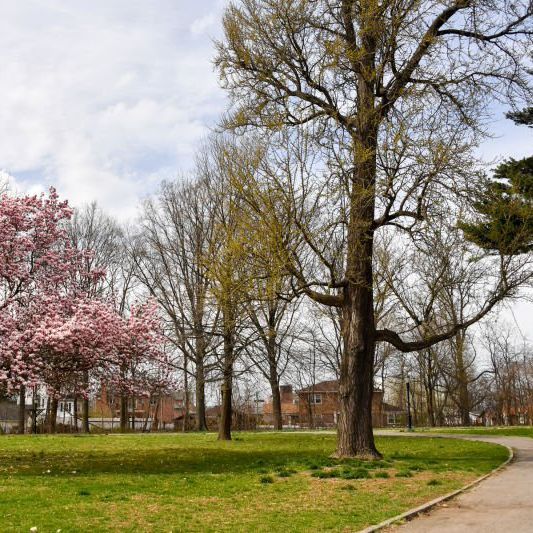
Golden Pond in Crocheron is the jewel of Bayside. Sitting at the end of 35th Ave, the pond provides natural areas landscape, wildlife viewing, and fishing areas. Friends of Crocheron has been advocating for a Natural Areas Restoration of the pond before it was decimated by Ida in September 2021. Local journalist Katherine Donlevy wrote Ida ‘mudslide’ into pond piques concern about the incident and interviewed Dana Gumb, who is a volunteer of Friends of Crocheron & John Golden Park along with the Chief of the Staten Island Bluebelt, a large water project in Staten Island to manage flooding. Dana is quoted as saying:
“The mudslide situation is a dramatic instance where you have material lowering the depth, making the pond more shallow. The pond water heats faster [when it’s shallower]. The sunlight penetrates the full depth of the pond. The warmer the water, the less oxygen, so the less marine life can survive there, and there’s less food for wading birds ... You’re talking about a whole ecosystem that’s being degraded by it being filled with sediment.”
In the summer of 2025, Emilia, a local GS, chose to do her Silver Award to study and help clean up damage from Ida. Her work found that the debris from the mudslide and retaining wall had lowered the depth of the pond and had raised the water temperature. These changes to Golden Pond disrupt what Prudue University, More than just a puddle, (2021) calls the "balance between nutrients, plant growth, fish populations, water chemistry, sedimentation and other factors must be maintained to maximize the health and utility of a pond."
Citizen Scientist Research, Summer '25
Emilia's study (research deck and New York Post article) showed us that the pond's depth fell dramatically, and since shallow water warms faster than deeper water, we can assume that there is now less marine life in the pond. Along with depth calculations and a cleanup with trail maintenance, Emilia took readings of the pond water quality in the morning (around 7 am).
Results show that the depths of the pond have changed by as much as 7 feet and 3 inches. Now the pond is a maximum of 2 feet deep - leaving little space for plants and wildlife to live. We are pleased to have had the pleasure to connect Emilia with our resident conservationist, Dana Gumb, and also Michael Feller, former Chief Naturalist of NYC Parks from 1987 to 2014 and current Chair of Conservation for Friends of Alley Pond Park. Michael was one of two local environmentalists Emilia worked with to measure the depth of the pond. Emi also worked with Friends of Crocheron to bring together stewardship & trail work experts to lead a volunteer event, to cleanup around the pond and protect the pond from future erosion.
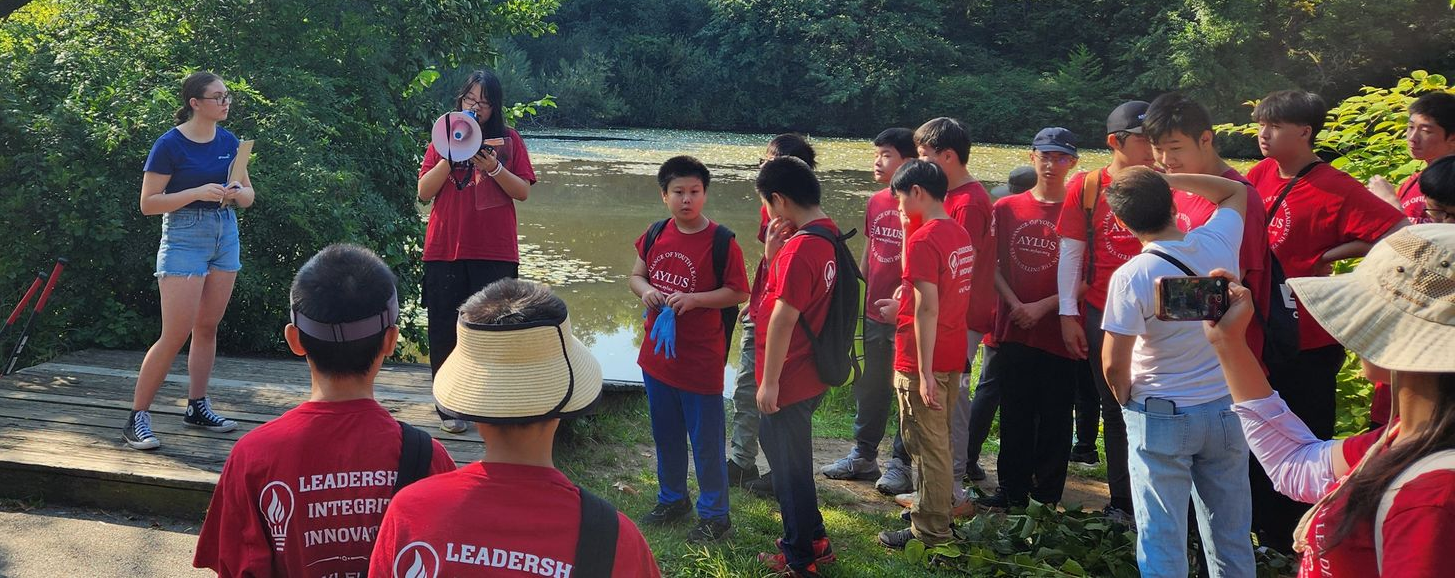
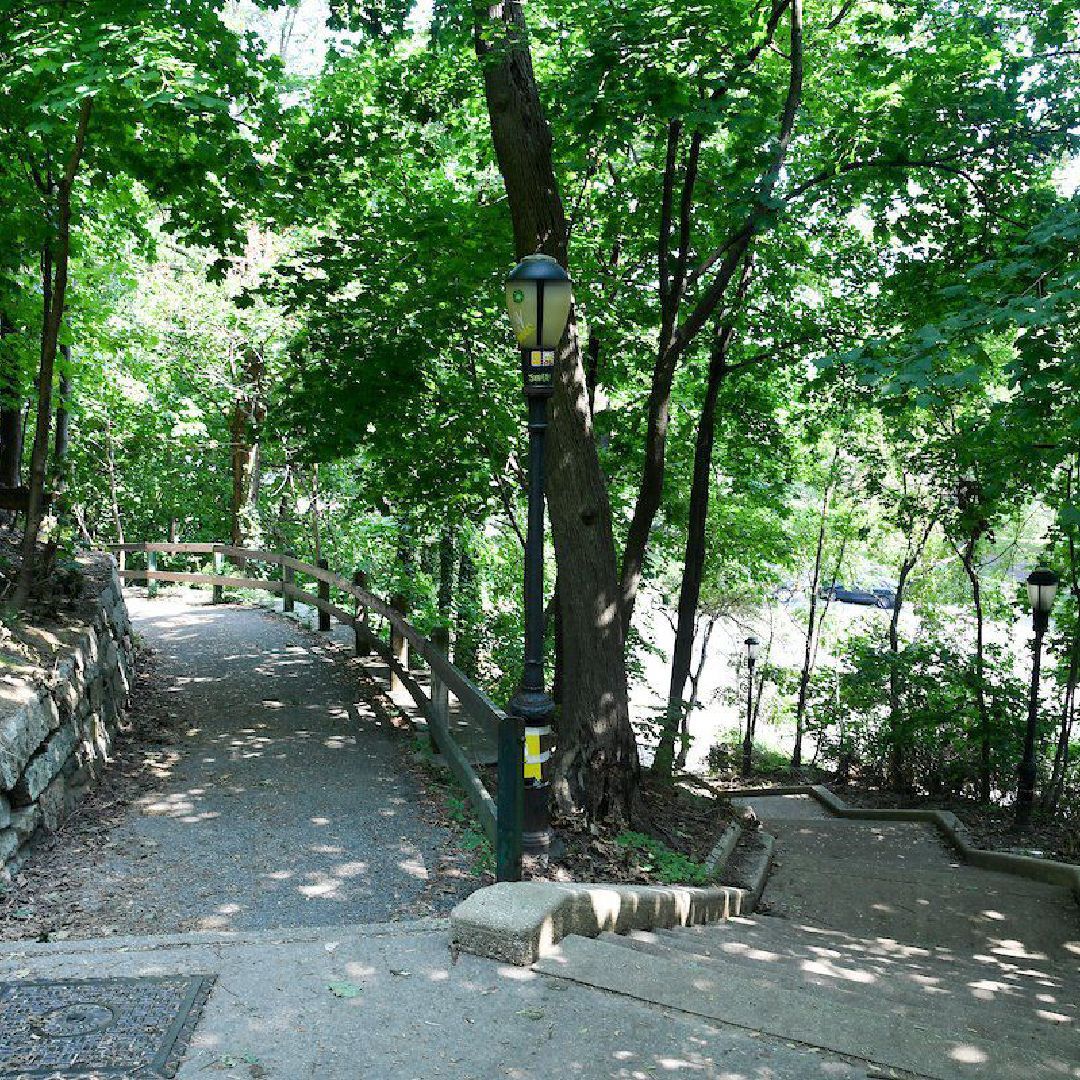
GS Emi & ASYLU Pond Cleanup. End of summer 2025, Emi brought together NYC Parks Super Steward John and SCA Trail Maintainer Julian to work with ASLYU to repair the trail after heavy rains and cleanup the pond and repair the trail.
More Debris Has Caused the Lower Water Level
In 2021, Hurricane Ida caused extensive damage to Crocheron Park. FEMA repairs to the destroyed paths from Ida only just began this past January. Anyone that has been to Golden Pond knows that it sits at the bottom of the Big Sledding Hill, and has a steep hillside with homes along the ridge. These homes have retaining walls that create 15-25 foot high walls, allowing the residents to have a flat backyard or deck.
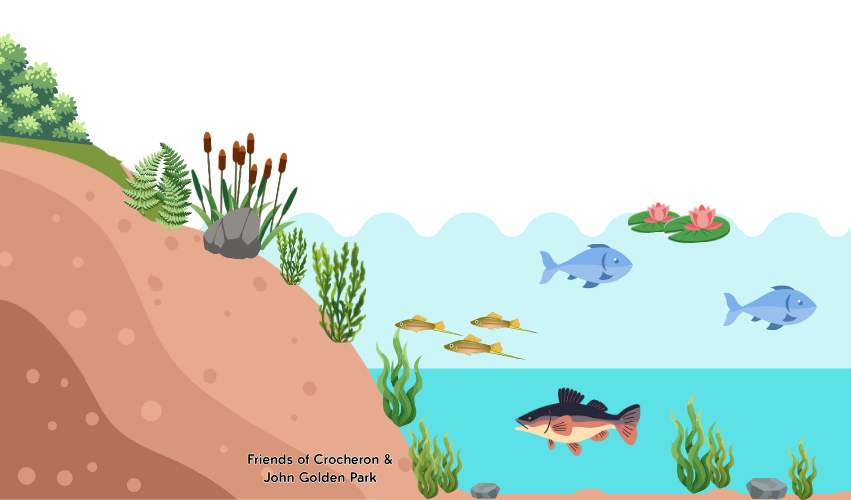
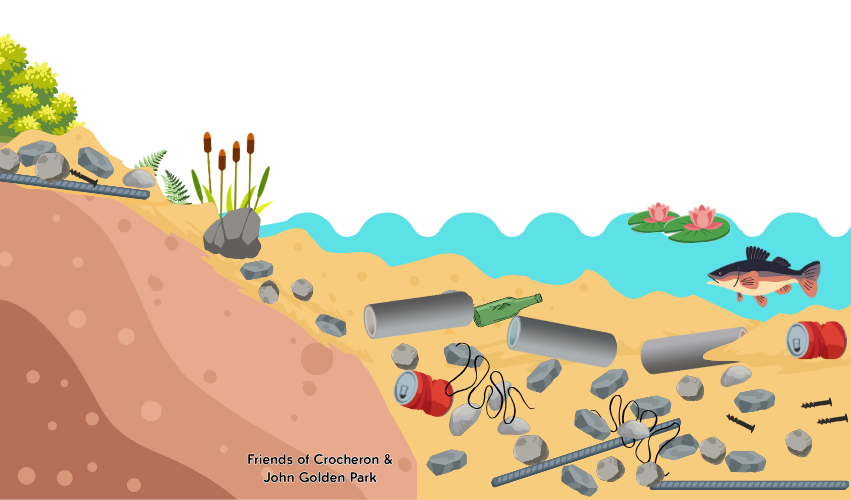
Effect of a Ida on Golden Pond. Use arrow on graphic to slide back and forth to see impact of flooding. Interactive graphic representation of the influx of retaining wall backfill and garbage that now litters the pond.
We can estimate that 22.2 cubic yards of gravel with a backfill, with a weight of 50,418 pounds, emptied into the pond, essentially the force of water from north of the pond, from drain and low point on Corbett Ave. At an estimated 40 feet wide and 15 feet high, the 600 square foot wall spewed the sand, gravel, rebar, piping, and mess from the backyard shed that also collapsed into the park. Calculations made using two different construction calculators, omnicalculator.com and inchcalculator.com.
All of that material emptied then into the park, much of it then entering into the pond. This resulted in an extraordinary reduction in depth of the pond, along with literally tons of man-made unnatural material now in settled at the bottom of the pond. Material left in the park continues to fill Golden Pond due to ongoing erosion from rain/snow.
Failed Retaining Wall - Video of Ida Damage. Video taken a week after Hurricane Ida September 2021, showing the failed retaining wall its debris spread throughout the park, just south of the pond.
Bottom of a Funnel
The topography surrounding Golden Pond feeds the pond during rain events through surface water run off into the pond. From DEP maps that Dana acquired can see that there are a few drains that enter the pond, but we are waiting to hear back from DEP concerning a study of these drains, if they can be operation again to help reduce runoff (and erosion) into the pond.
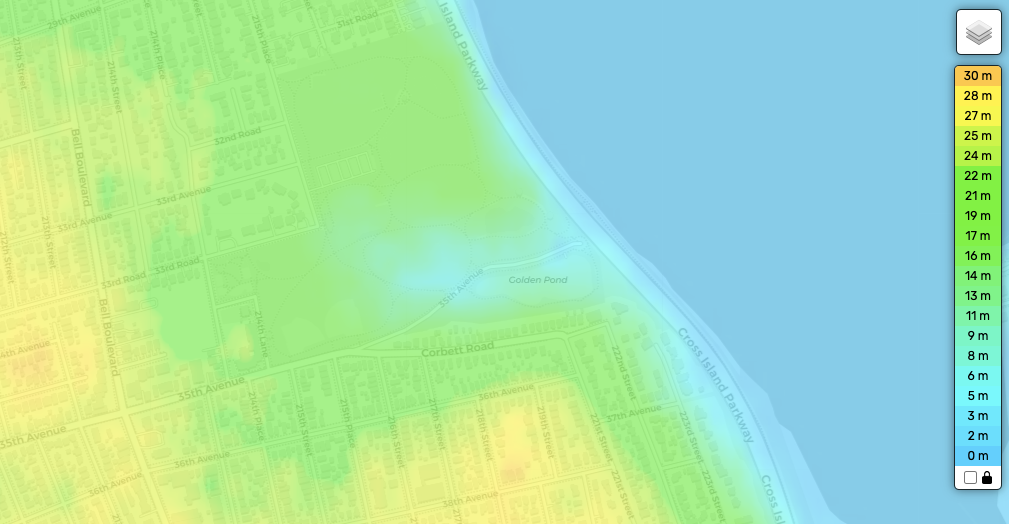
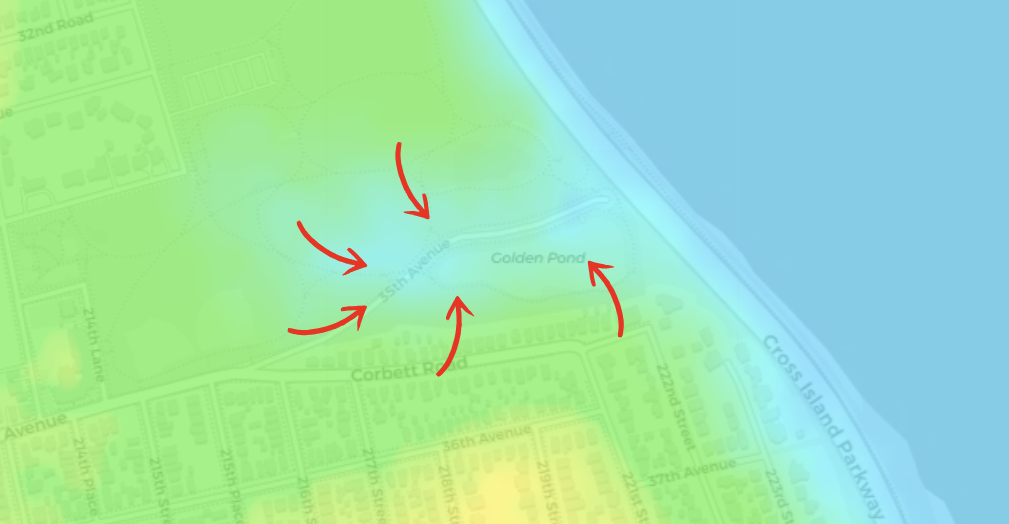
Queens County Topographic Map. topographic-map.com
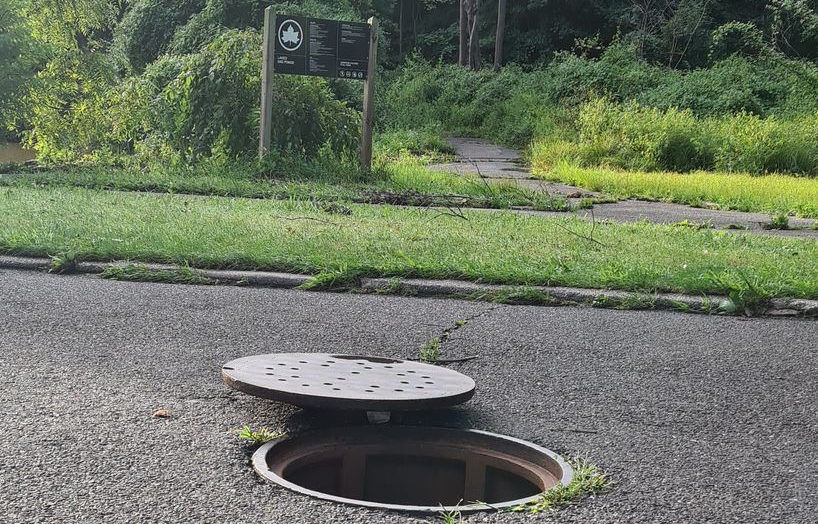
Blown Off Manhole Cover After Ida. One of five manhole covers that were pushed off due to super surge of water into system during Ida.
When it rains or snow melts, water travels across the ground's surface and reaches a body of water, like a lake, river, or the ocean. Surface runoff occurs when water is unable to penetrate the ground due to cement, over saturation, or even undersaturation (like during droughts). It is most visible during heavy rain events. It is a usual occurance in urban areas where manmade surfaces reduce water's ability to saturate the land and it pools into puddles, or rushes down catch basins.
In March 2026, Community Board 11 hosted Rafael CP Santo, who is in the Master of Urban Planning program at CUNY Hunter College. His presentation, Problematic Flood Zone Locations in CD11Q, is part of the NYC Community Planning Fellowship 2025-2026. While Rafael's work focuses on protecting homes and businesses, not measuring damage to green spaces, the work can also be used to push for environmental justice to protect our pond. The pond is shown to be at one of the lowest water levels along with having a greater risk of flooding, even flooding into the Cross Island Parkway.
The following map of catch basins shows why water rushed into the park, along with topography of the area, the lack of catch basins in the neighborhood to the west and clearly too few catch basins in the area to the south. Similarly, there are not enough rain gardens to collect water as well, shown in the second graphic of green infrastructure, showing that about three quarters of CD11Q does not any green infrastructure project. In his conclusion, Rafael states that this is a gap in services should be addressed to better serve the district.
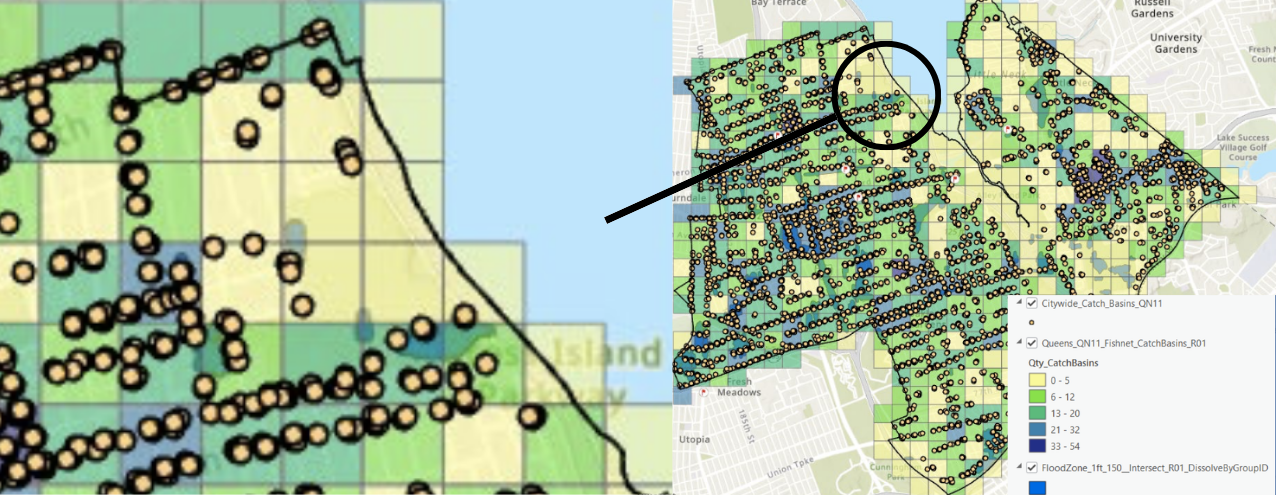
Catch Basins – Runoff Collection Map - Problematic Flood Zone Location Map Queens Community Board 11. By Rafael C.P. Santos,
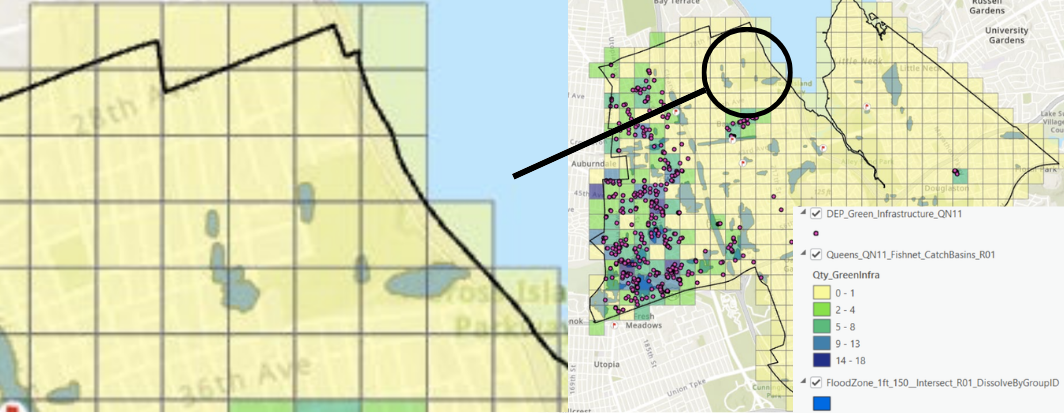
Green Infrastructure Map - Problematic Flood Zone Location Map Queens Community Board 11. By Rafael C.P. Santos,
What Makes a Pond Ecosystem Healthy?
Golden Pond is a kettle pond, formed from the remnants of the glacier, fed by streams and groundwater. It is part of our critical environmental infrastructure. It collects and stores rain water from man-made drains, through natural springs, and overflow from heavy rains. It is also connects to Little Neck Bay through a weir at its eastern end.
While Golden Pond is surrounded by unnatural things like roads and cement backyards, it has extensive wildlife that supports migrating birds, fish, turtles, frogs, and various pollinator insects. Plant life around the pond includes jewelweed, cattails, water lilies, and a weeping willow. Unfortunately, fishermen have said that the carp in the pond kick up sediment on the bottom of the pond, lifting up silt particles to create a muddy pond. This reduces the sunlight that can penetrate the layers of the pond, as ponds with low water quality may not have any plants living in it at all. This is the 'muddy puddle' syndrome which Dana spoke about in 2021. Below is an example of a healthy pond.
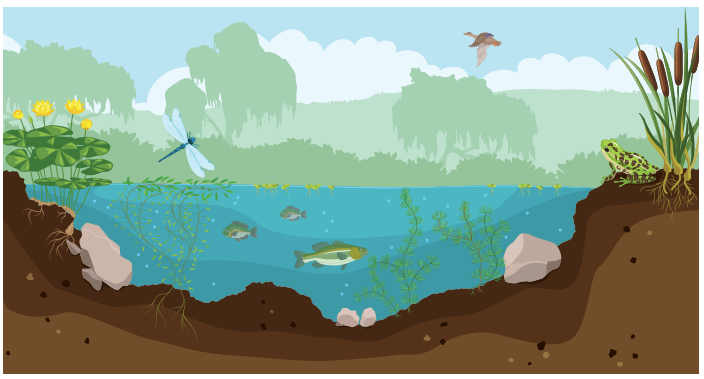
An Example of a Pond Ecosystem. Diagram courtesy of Purdue Pesticide Programs. Purdue University.
According to Purdue University, "to promote healthy fish populations, 15-20% of a pond should contain submersed vegetation." The extremely shallow depth in Golden Pond means that the water will be warm, with less or no cooler space for plants and wildlife. Without deeper water for fish, amphibian, and insect habitat, there is not really any place to provide refuge from cold temperatures in the winter. The below figure from USDA Chapter 11 Ponds and Reservoirs shows "the recommended minimum depth of water for ponds if seepage and evaporation losses are normal." These depths allow the pond ecosystem to function properly, as "fish need areas 2 to 6 feet deep for feeding and nesting."
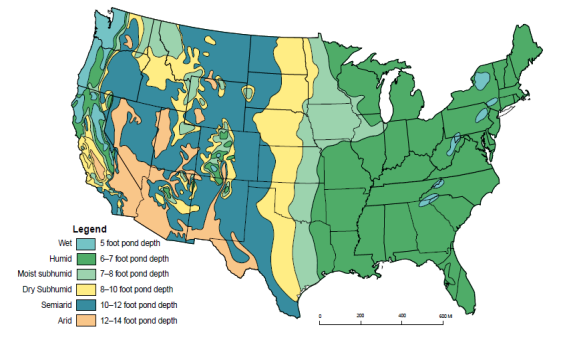
Recommended Minimum Depths of Ponds and Reservoirs. USDA Chapter 11 Ponds and Reservoirs.
The US Natural Resources Conservation Service. USDA. (2021), states in Chapter 11 Ponds and Reservoirs that"a variety of water depths are needed to provide the greatest diversity. Deeper water provides habitat for fish. " It goes on to state that logs provide sunning opportunities for amphibians and turtles.
The Pond Habitat - Exploring Habitats UC Marin Master Gardeners. YouTube.
Emi's research touched on that fact that warmer temperatures allow algae blooms to thrive. In addition, she states that "low turbidity levels that allow more sunlight to penetrate the water, and excess nutrients. The mean temperature over 7 weeks over [summer 2025] was 78.8 °F. I have spoken with Parks about the pond since fall of 2020 and they have been proud of the fact that the pond does not have algae blooms, as nearby ponds have had major issues with it. The pond compensating well under unfavorable conditions does not mean that it is doing okay. We need to act in order to save the pond for future generations.
Stewarding for Next Generation
During one of our cleanup events, NYS Senator John Liu spoke about his childhood memories fishing for sunfish in Golden Pond and Oakland Lake. Other families share with us that they moved to Bayside because of the park and Golden Pond. We continue to work with NYC Parks and local elected officials to advocate for the parkland.
Golden Pond is a key part of our community's landscape and our shared cultural heritage. We continue to enjoy the pond and benefit from living near beautiful body of water. It is important that we steward so the future generations can enjoy this natural space as well.
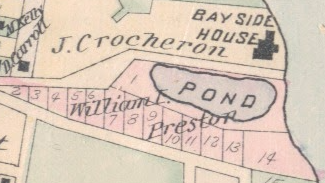
1891 Map Showing Golden Pond. Map of Flushing, closeup of insert showing the oblong pond.
The failed retaining wall is the area where the most erosioin has occured, leading to extensive debris to enter the pond. This area is shown here in 1934 with a depth of 7 feet, which was largely unchanged in the 1969 records that Emi used, thanks to the Bayside Historical Society's archive. It is now 6 inches at its lowest.
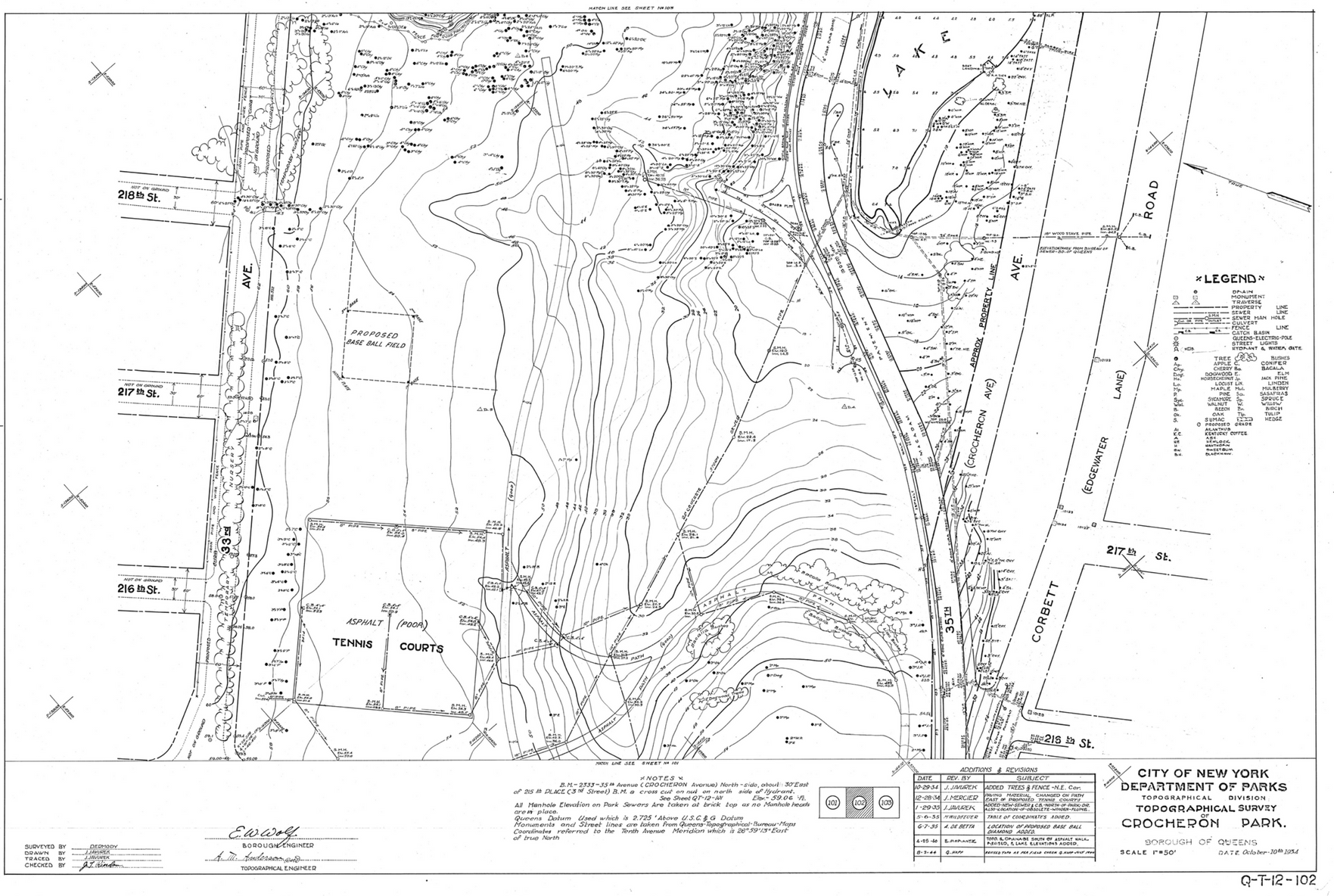
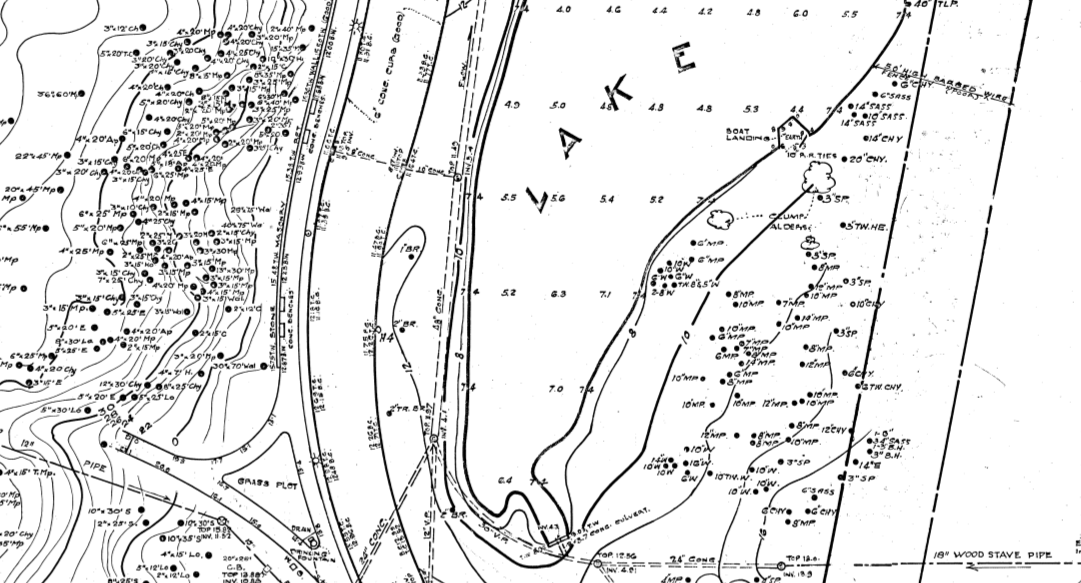
1934 Park Map & Insert of Golden Pond.1934 Map by NYC Parks showing the planting plan around the pond. The hoover shows the detailed view of the pond, and the extremely steep slope along the northern side. Image is NYC Parks & Recreation.
Other Types of Kettle Ponds - LI Coastal Plain Ponds
Steve Young's presentation on the natural kettle ponds of Long Island explore the unique features, plants, and wildlife the make up our unique landscape. Similarly to Golden Pond, these ponds are under threat from habitat degradation. You can also seem more on Coast Plain Ponds at NY Natural Heritage Conservation Guides.
Long Island's Coastal Plain Ponds: A Unique Ecosystem Under Threat. Long Island Natural History Conference. YouTube.
Bayside Flooding Town Hall
Date: March 23, 2026 | 6:00 - 8:00 PM
Location: Redeemer Lutheran Church Gymnasium
Jessica Burke – Founding President, Friends of Crocheron & John Golden Park
A Bayside resident since 1989, Jessica Burke attended PS 41, where she developed an early interest in environmental sciences. She was especially influenced by Mrs. Cilmi, whose demonstration - carefully slicing an apple to illustrate the fragility and scarcity of Earth’s resources - left a lasting impression.
In the summer of 2020, Jessica founded Friends of Crocheron & John Golden Park to help clean up and restore this local treasure. She also created a historical archive to connect the community through their shared cultural heritage. Since then, Jessica has used the organization as a platform to advocate for increased city funding for parks while opposing the allocation of public funds to private organizations that manage parklands without the same transparency required of NYC Parks. She has provided testimony before the City Council in support of these efforts. Jessica holds an M.A. from John Jay College of Criminal Justice and is the author of When the Well Runs Dry: Ethics and the Privatization of Water, a work that deepened her commitment to preserving public resources, including her local park.