Easy Tips and Recommendations for Eliminating Plastic from Your Life - from a 10 Year Enthusiast
Easy Tips and Recommendations for Eliminating: Plastic from Your Life - from a 10 Year Enthusiast
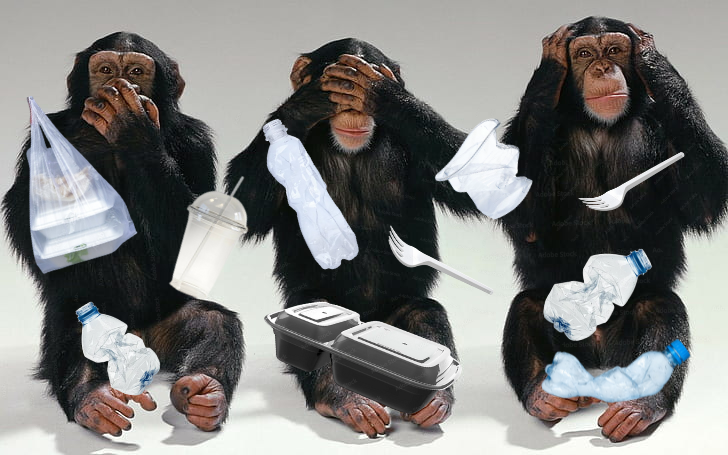
By now, we all know that plastic is harming us and our planet. We also know by now that recycling plastic is largely an illusion.
Recycled plastic costs more than virgin plastic because the expansion of virgin plastic production is keeping the prices of new, virgin plastic low. (1)
The “Zero Waste” lifestyle offers hope of a future not poisoned by this toxic material. By refusing single use plastic and instead using sustainable and reusable materials we can create a better future for us and our planet.
Consider decentering yourself as a being who can take any resource available and instead centering the planet as an ecosystem that depends on your stewardship.
Around 33 billion pounds of plastic enter the ocean every year. This is the equivalent of dumping two full garbage trucks of plastic in the ocean every minute. (2)
As a person who has been aspiring to be Zero Waste for over 10 years, I have learned some really simple alternatives to single use plastic. Keep in mind that
being 100% plastic free is not possible in the decade that we live in. Using up the plastic we already have and not producing more is a good idea for the planet.

Being Zero Waste is a labor of love; a big part of which is bringing your own reusables from home.
Reusable food containers Over the years, I have experienced restaurants and other food places begin to accept the use of reusable containers. Some places like Starbucks and Dunkin Donuts will only accept their own branded cups for some silly reason. Materials like bamboo, aluminum and stainless steel are great lightweight and sustainable alternatives to plastic.
Tip:
Ask restaurants that you frequent what size container they use for takeout, then buy that size glass container.
Tip: Cotton tote bags are cute for carrying your reusables to restaurants.
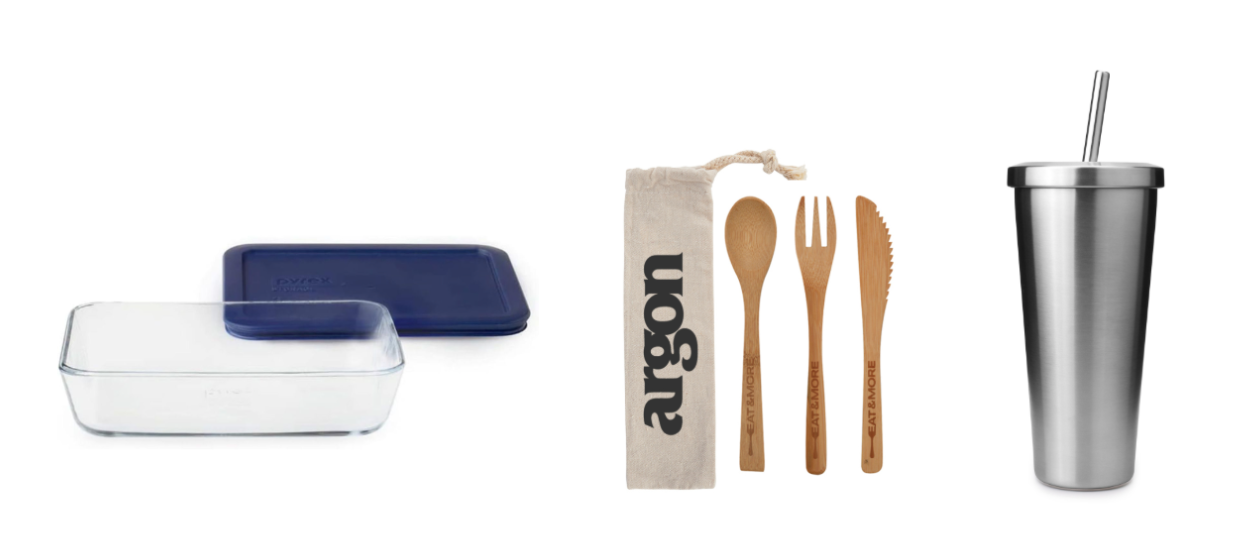
3-Cup Glass Container
3 PC set Bamboo Utensils w/ Sleeve
16 Ounce Stainless Steel Cup with Lid
Detoxify Your Home
Cleaning Did you know that you can use bar soap to clean everything from your floors to your hair? Brands like Dr.Bronner’s Castille Soap bars are designed to be used for cleaning yourself and everything else. This eliminates plastic bottles in your bathroom and under your kitchen sink. The ingredients and fragrance are all natural and don’t poison the air and water as you clean!
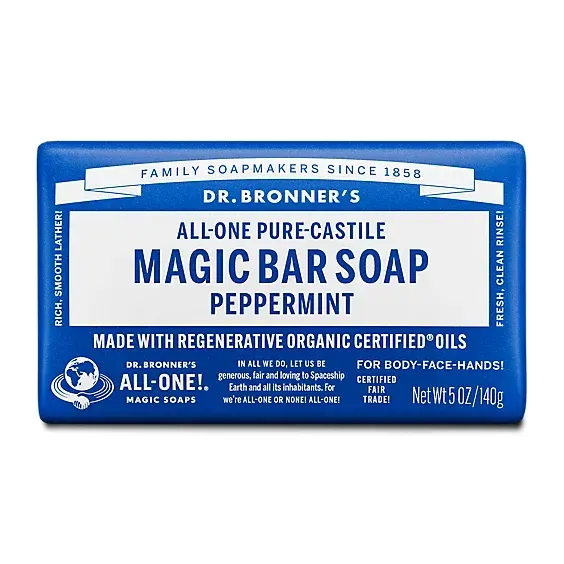
Dr Bonner's Soap
Tip: Fill up a container with warm water and roll a bar of soap around in it for a little bit and you’ve got liquid cleaner for surfaces, toilets and dishes. You can also lather a sponge or rag directly with the bar of soap.
Laundry Powdered
laundry soap is a widely available alternative to detergent liquid that comes in plastic containers. White vinegar can be found in glass bottles and can be used instead of fabric softener. Liquid laundry detergent can be bought at bulk refill stores.
Tip:
Pre-treat stains with bar soap before throwing in the wash as laundry powder isn’t the best at removing stains. I use black coal tar soap.
Fossil-fuel based fibers account for over two-thirds (69%) of textile production, with a projected increase to 73% by 2030. (3)
Clothing
Clothing made from natural fibers like hemp, cotton, linen, silk and wool breathe easily and are not toxic. Bamboo is now also used to make wonderfully silky, breathable and warm clothing.
Tip: Hang up clothing that is made of synthetic material so as to keep microplastics from shedding into the atmosphere.
About 35% of “primary” microplastics in the oceans (excluding “secondary” microplastics that come from the breakup of bigger plastics) comes from the laundering of synthetic textiles. (4)
Cosmetics Makeup in zero-waste containers is widely available online and at natural grocers. My favorite zero-waste makeup brands are DabHerb, Fat and the Moon, and Aether Beauty.
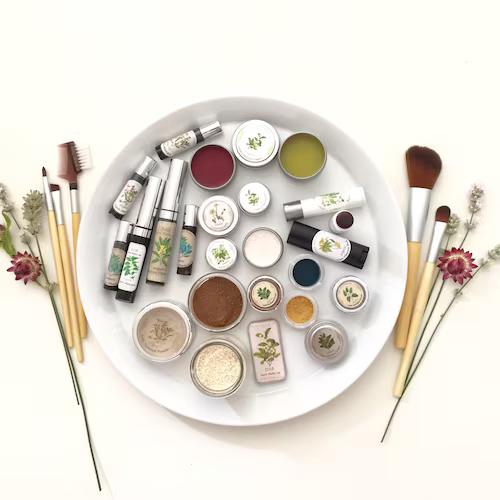
Dab Herb Cosmetics
Lush Cosmetics offers high end (and wonderful smelling) package free and low-waste packaging soaps, deodorants, lotions and other cosmetics.
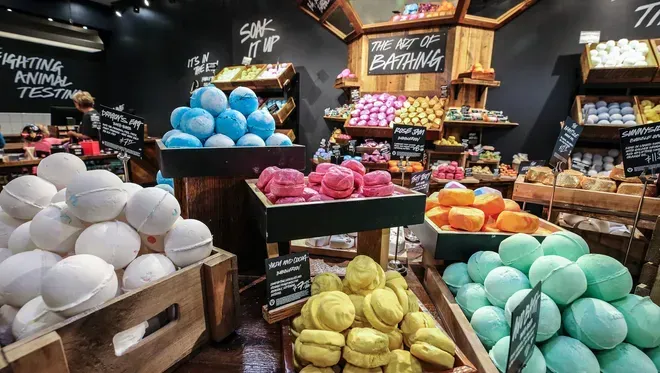
According to the American Dental Association, one billion plastic toothbrushes are thrown away each year in the United States, creating 50 million pounds of waste. (6)
Oral Care
Boar bristle toothbrushes are very firm, last a long time … and are not made out of plastic!
Toothpaste tablets offer powerful cleaning, often come in sustainable packaging and can be bought at bulk refill stores.
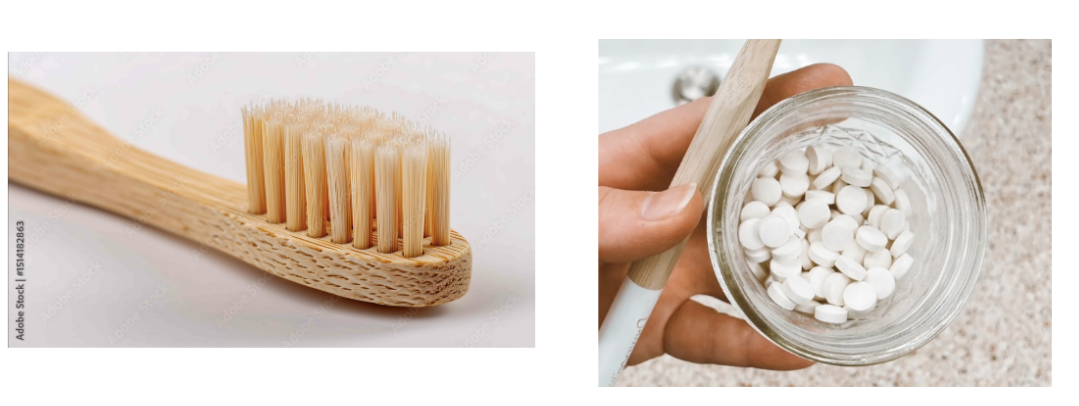
Boar hair bristle and bamboo toothbrush Toothpaste tablets
Tip: Soak boar bristle toothbrush for 30 seconds or more before using to soften the bristles.
Tip: Bite toothpaste tabs in half as they are very powerful and produce a lot of foam.
Plastic Free Cooking and Eating
Package Free Food
There are more stores than ever that sell common food items like grains, dried legumes, granola, and even oil in bulk. Just bring your own containers and get as much as you need. Along with the many benefits of shopping at the farmer’s market, it is a good way to get your fruits and veggies without packaging.
Cookware Avoid non-stick cookware as it contains PFAS (forever chemicals) that get scratched and leak into food AND are an environmental nightmare to manufacture. (5) With the right technique, cast iron, stainless steel, ceramic and glass cookware are good alternatives to non-stick pans.
Food Storage
Glass and aluminum containers are better for storing food than plastic because when hot food touches plastic, plastic leeches.
Miscellaneous
Stationary & Shipping
Kraft paper tape can be used on cardboard boxes and paper. Just wet the adhesive side and lay down.
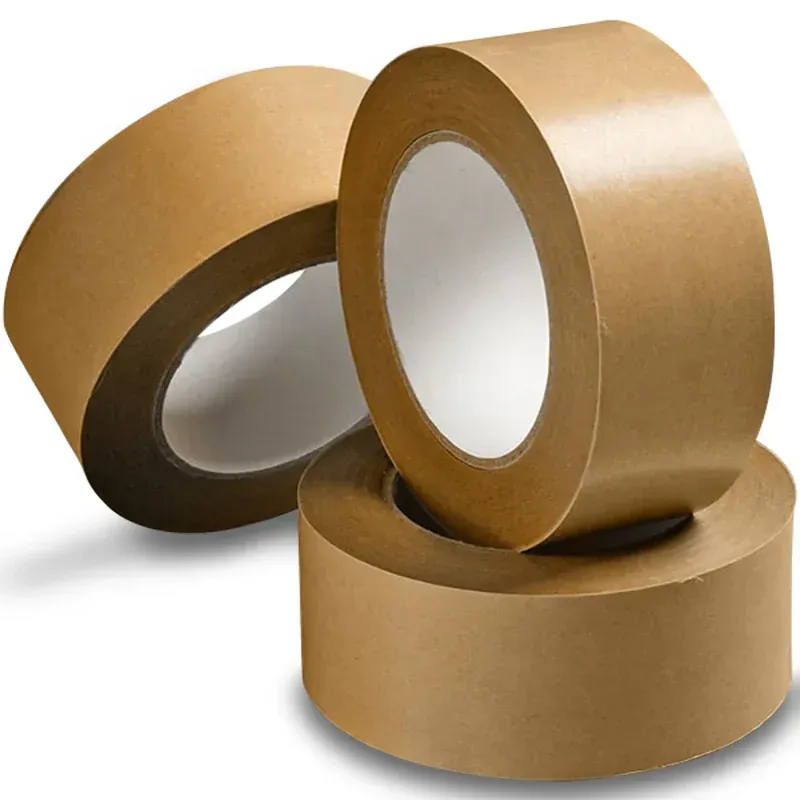
Kraft paper tape roll
Tip: Cut pieces from the roll and keep handy in different locations for use when needed.
Consider what our ancestors did 100 years ago before the invention and widespread use of plastic. We don’t need to choose convenience over our health and the health of our planet.
Roxann Valdes
Roxann is a member of Friends of Crocheron & John Golden Park.
Sources
1. Sanzillo, Tom, et al. Impact on Virgin vs. Recycled Plastics Prices and Implications for a Production Cap. Institute for Energy Economics and Financial Analysis, 22 Nov. 2024, [Link]
2. Lau, Winnie W. Y., et al. “Evaluating Scenarios toward Zero Plastic Pollution.” Science, Sept. 2020, [Link]
3. Trunk, Urska, et al.
Fashion’s Plastic Paralysis: How Brands Resist Change and Fuel Microplastic Pollution. Changing Markets Foundation, Sept. 2024,
[Link]
4. Boucher, Julien, and Damien Friot.
Primary Microplastics in the Oceans: A Global Evaluation of Sources. International Union for Conservation of Nature (IUCN), 2017,
[Link]
5.
https://www.thenewlede.org/2025/09/california-cookware-pfas-ban/
6.
https://plasticmakers.org/brushing-away-plastic-waste/